
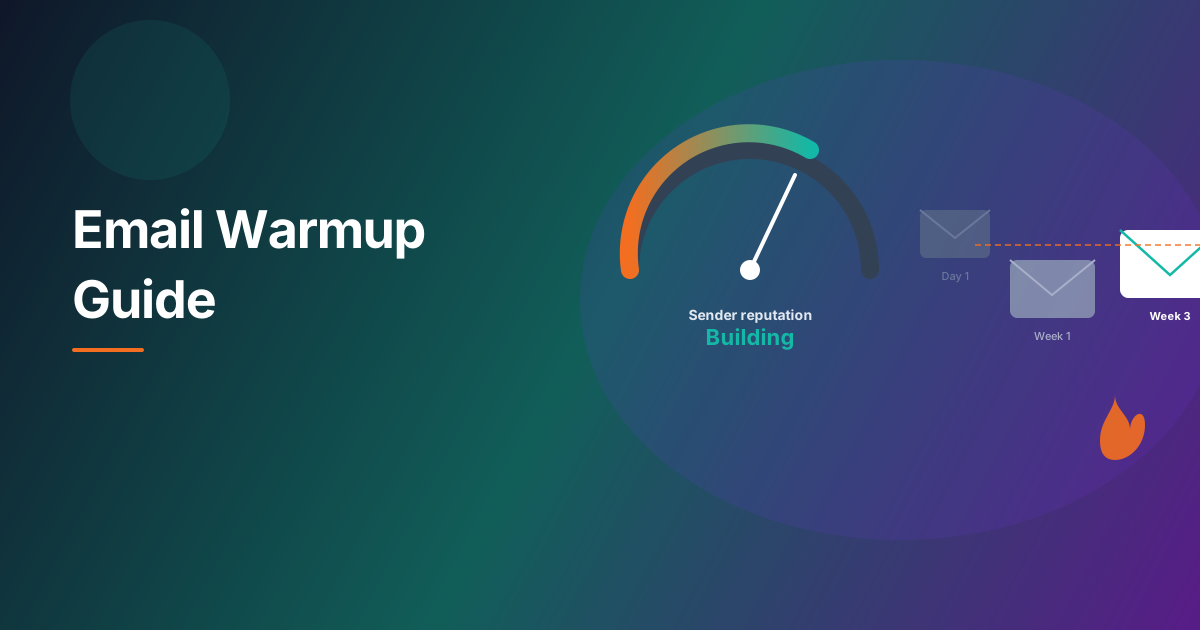
Email warmup is the practice of gradually increasing send volume from a mailbox so providers can observe consistent, wanted mail before you reach full campaign size. It matters most for new accounts, domains with little sending history, or mailboxes that have been idle for a long time.
Why warmup exists
Mailbox providers protect their users by throttling or filtering mail from senders with sudden, unusual patterns. A brand-new mailbox that sends thousands of messages on day one looks different from one that has sent steadily for weeks — even if every recipient opted in.
Warmup does not bypass provider rules or guarantee inbox placement. It helps your sending pattern look more like normal, permission-based mail over time.
When teams should prioritize warmup
- You are connecting a Gmail, Microsoft 365, or SMTP sender for the first time.
- The mailbox has sent very little commercial or bulk-style mail before.
- You paused sending for an extended period and plan to resume at scale.
- You are onboarding a new domain or subdomain for campaigns.
If a mailbox already has a stable history of wanted mail at similar volumes, aggressive warmup may be less critical — but sudden jumps above recent norms can still trigger throttling. See our Gmail and Microsoft 365 limits guide for provider-specific planning.
What a sensible warmup pattern looks like
Most warmup programs share the same principles:
- Start with low daily volume to engaged, permission-based contacts.
- Increase gradually over days or weeks rather than in single large steps.
- Keep complaint and bounce rates low — pause or slow down if metrics worsen.
- Send on a regular schedule instead of irregular bursts.
The right pace depends on your list quality, provider, and account type. There is no universal day-by-day chart that works for every sender; adjust based on what your metrics show.
How SendWise approaches warmup
Warmup is included on every SendWise plan, including Free. When you connect a sender, SendWise helps you ramp daily volume in a controlled way alongside per-sender caps that discourage risky spikes. Learn more on our deliverability page and in the broader deliverability guide.
Warmup works best together with list verification — sending to invalid addresses during ramp-up can hurt the very reputation you are trying to build. Read our list verification guide for when to verify.
Common warmup mistakes
- Skipping verification — Invalid addresses produce bounces that undermine early reputation signals.
- Buying or scraping lists — High complaint rates during warmup are difficult to recover from.
- Ignoring provider throttling — If sends defer or fail, reduce volume instead of retrying aggressively.
- Multiple mailboxes, one bad list — Rotating senders does not fix list-quality problems.
Next steps
Connect your sender through Gmail, Microsoft, or SMTP, verify your list, and let warmup run while you monitor bounces and engagement. For campaign tooling, see email marketing features or browse the Resources hub.